

Maintaining your Heli-Tilt attachment is crucial for longevity and optimal performance, and greasing is a key part of that routine. Here’s everything you need to know about properly greasing your Heli-Tilt, including how often to grease, how much to apply, and the specific products that work best.
Why Greasing a Heli-Tilt Is Different
Unlike other parts of your excavator, greasing the Heli-Tilt is unique. Typically, excavator maintenance involves lubricating pivot points like pins and bushings. However, for the Heli-Tilt, the focus is on greasing the seal and thrust washer. This distinction is important because while the industry often advises "the more grease, the better," that doesn’t apply here. Over-greasing can actually be harmful.
How Often Should You Grease?
To keep your Heli-Tilt running smoothly, greasing once a week is recommended. Regular greasing ensures the internal components stay lubricated and minimizes unnecessary wear.
How Much Grease to Apply
The amount of grease needed varies depending on the Heli-Tilt model, but generally, a couple of pumps will suffice. Here are specific guidelines based on the model:
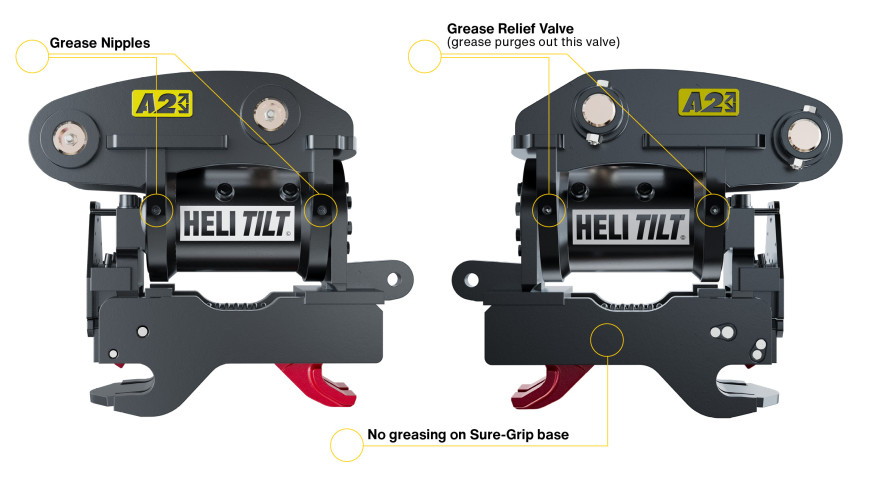
- HT Model: Pump grease until clean grease appears from the relief valve on the opposite side of the coupler. Tilting the hitch during while greasing helps circulate the grease more effectively around the internal wear bushes.
- HTR Model: Tilt the hitch fully in one direction and pump until you see grease emerge from the external seal on either end of the coupler. Repeat the process with the coupler fully tilted in the opposite direction.
Important Tips:
- Pump slowly: To avoid pressure spikes that could damage seals.
- Avoid using an electric grease gun: Electric grease guns delivers grease at an uncontrolled speed, which can block the relief valve and cause excess grease to escape from seals.
Recommended Grease Types
Using the right grease is essential. A thinner, lithium-based grease like Castrol GTX or Mobil XHP 220 works well for Heli-Tilt attachments. Look for a base oil viscosity of around 240 cST. Thicker greases aren’t recommended because they can create back pressure, making it difficult for the grease to flow through the relief valve.
Watch for These Warning Signs
Regularly check your Heli-Tilt for these signs of potential issues:
- Difficulty Greasing: If the coupler isn’t accepting grease, or if the grease gun feels unusually tight while greasing, this could indicate a blockage in the grease pathway or grease relief.
- HT Model: Excessive grease seeping from the seals at the front or back of the coupler, or lack of grease relief through the grease relief valves on the opposite side.
- HTR Model: If grease doesn’t relieve through the front or back seals, there may be an issue needing attention.
If something seems off or not right, we welcome you to call our team for advice and send us photos or videos to help diagnose the problem.
Over-Greasing vs. Under-Greasing: What’s the Risk?
- Over-Greasing: Wasting grease is one concern, but over-greasing can also force the main pressure seal to extrude, allowing hydraulic oil to pass through. This can lead to functional issues and even cause leaks, impacting the performance and longevity of your Heli-Tilt.
- Under-Greasing: Not greasing enough can cause seals to dry out, leading to leaks, or cause wear to the grease track or thrust washer, affecting performance over time.
What’s Up with the Broken-Looking Grease Nipples?
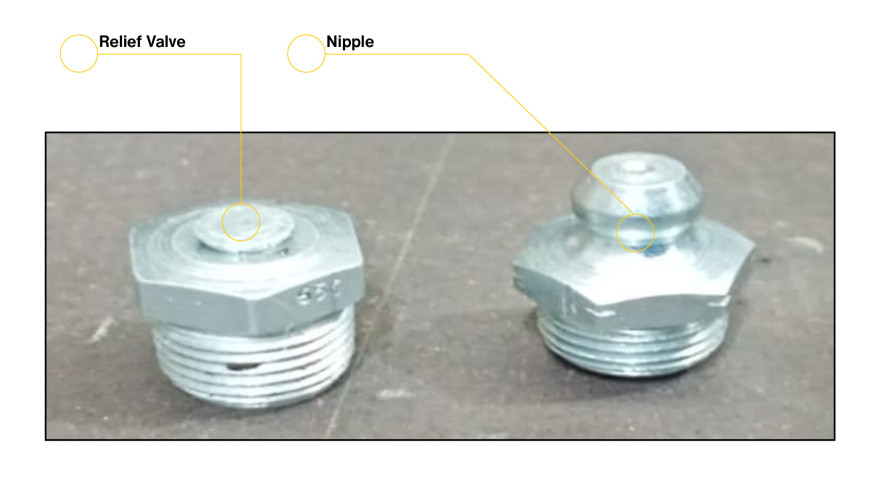
If you notice two grease nipples on your HT model that appear broken, don’t worry—they’re actually grease relief valves designed to release grease once the internal chamber is full. These valves now have caps to prevent tampering.
By following these greasing guidelines, you can ensure your Heli-Tilt remains in top condition. For any concerns or additional questions, feel free to reach out to our team!
Tags:


