
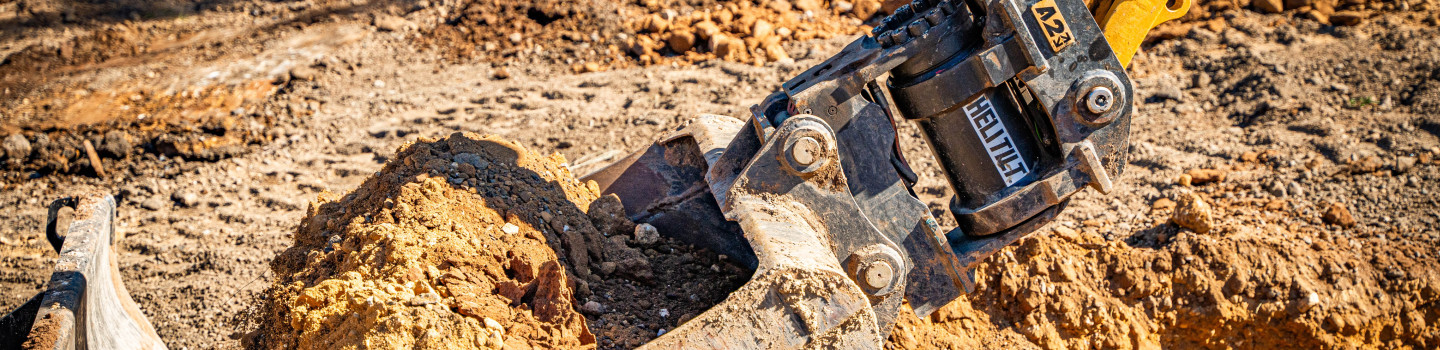
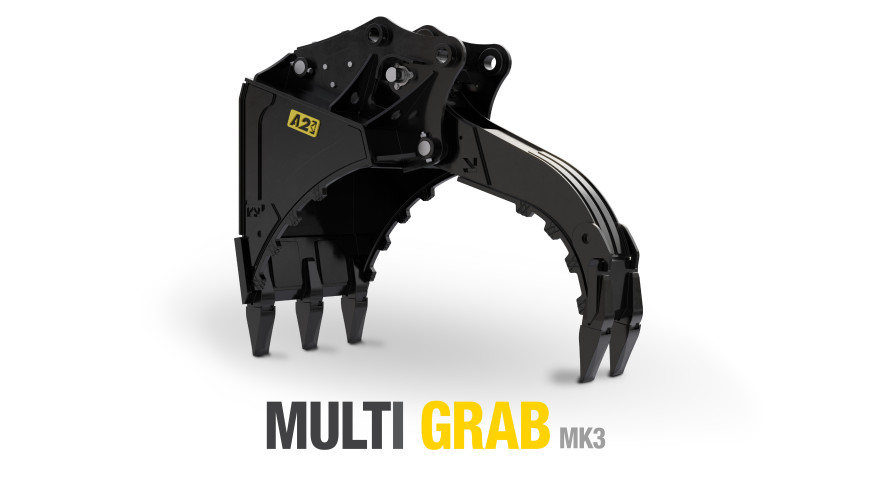
We did the maths to identify the peak grab force so you don't have to.
"What's the grab force on this thing?" It's one of the most common questions we get about the Multi-Grab, whether it's a dealer fielding it from a customer on the yard floor or an owner-operator asking it before they commit to a machine. And it's a fair question to ask, because it's a genuinely tricky number to pin down. There's more than one way to measure it, and not every spec sheet is measuring the same thing.
So here it is - the actual tooth-tip force for every size in the Multi-Grab range, pulled straight from the engineering calculations sheet. No rounding up. No brochure gloss. Numbers you can quote with confidence, whether you're the one selling it or the one running it.
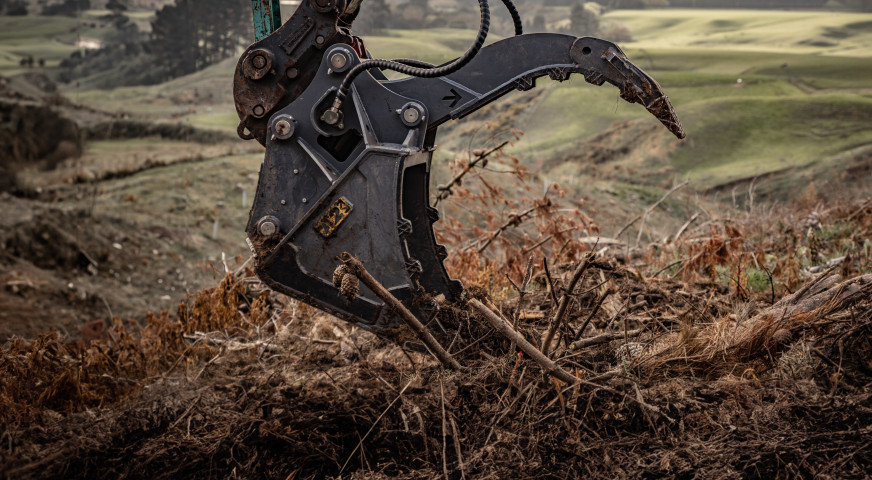
The number that matters isn't the one on the cylinder
Here's something most spec sheets won't tell you. The raw hydraulic push of the cylinder and the actual grab force at the tooth tip are two very different numbers.
Take the largest in the Attach2 range, the MGB300 (for a 25-36.9 tonne excavator). Its cylinder pushes with 47.9 tonnes of raw hydraulic force. That's impressive on paper, but it's not the number that matters on your job site.
Because of simple leverage, the tooth tip sits roughly 5.6 times further from the pivot than the cylinder does. The same physics that lets a long-handled wrench multiply your grip works against you the further out you go. So by the time that force reaches the tip, the actual clamping force is 8.52 tonnes.
We could mount the cylinder closer to the tip and get a bigger number to put on the page. That comes at a cost though, a shorter-lived, weaker thumb. So we've built it for strength first, and we'd rather just tell you the real number - the force that's actually clamped onto your material.
This is also why comparing grab attachments across brands by spec sheet alone rarely works. Unless you know whether a competitor's number is cylinder push or tip force, you're not comparing like with like. If you're weighing up options for a customer, or for your own fleet, ask the same question of every brand: is that the raw cylinder figure, or the number that's actually clamped on the material?
Grab force through crowd stroke - MGB200 (15-23.9t class)
.svg)
Multi-Grab Crowd Stroke Curve
Same shape, every size we build. Peak grab force lands almost exactly halfway through the crowd stroke, right where the teeth are actually clamped onto your material.
Six sizes. Six real numbers.
Grab force scales with the machine, not the marketing. Here's the peak tooth-tip force for every Multi-Grab in the range, calculated at Attach2's standard hydraulic circuit spec of 3000 psi (206.8 bar):
Weight class | Product code | Peak grab force |
3-3.9 tonne | MGB030 | 0.88 t |
4-5.9 tonne | MGB050 | 2.84 t |
6-9.9 tonne | MGB060 | 2.96 t |
10-14.9 tonne | MGB120 | 4.76 t |
15-23.9 tonne | MGB200 | 6.78 t |
24-36.9 tonne | MGB300 | 8.52 t |
Here's the detail that matters most. Across every size we build, peak grab force lands almost exactly halfway through the thumb's crowd stroke. Not at full open, not at full close, but right where the teeth are actually clamped onto your material. Same behaviour, every size, every time.
Getting the right size matters as much as the number itself. A Multi-Grab rated for a 6 tonne machine won't perform the same way bolted to a 15 tonner, and vice versa. If you're not sure which weight class fits your excavator, that's exactly what your local Attach2 dealer is there to work through with you before you buy.
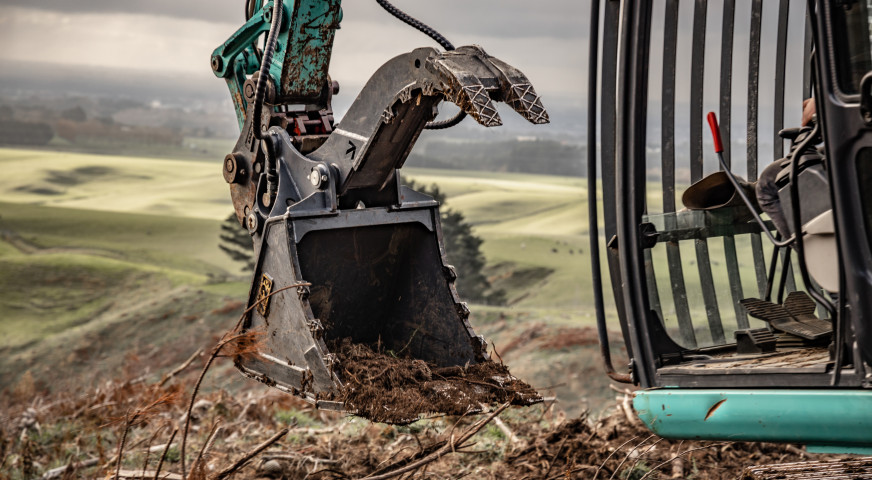
Grab force gets it there. The check valve keeps it there.
A big grab number is only half the story. What happens if a hose lets go, or the machine loses hydraulic pressure mid-lift.
Every Multi-Grab runs an oversized hydraulic cylinder with an integrated check valve. Once the jaw clamps down, the valve locks the ram in place. No movement is possible without positive pressure input from the operator.
That's the difference between grab force and holding force. The numbers above tell you how hard it clamps going in. The check valve is what stops it creeping open again, even under pressure loss.
That matters on site in a way a spec sheet number can't capture. A load creeping loose mid-lift isn't just a productivity problem, it's a safety risk to everyone on the ground nearby. For an operator, that's peace of mind on every lift. For a dealer, that's one less comeback or complaint to deal with down the line.

Built to survive the load it's rated for
A force number is only useful if the attachment can back it up, shift after shift. That's why every Multi-Grab is built with:
HB400 wear plating on every wear face, cutting edge and grab edge, exactly where the material fights back hardest
Purpose-built hydraulics. Cylinder, ports and check valve specified for sustained high-load grabbing, not generic off-the-shelf parts
Removable ram protection shielding the cylinder and hydraulic ports from falling debris
Self-contained, full-crowd design. No mechanical link to the dipper arm, so you keep full grip through the excavator's entire crowd range, at any angle
Hardened, shimmed pivot points for a tight fit from day one, not a thumb that develops play over time
Backed by a 3 year / 3,000 hour structural and materials warranty, including hydraulic components.
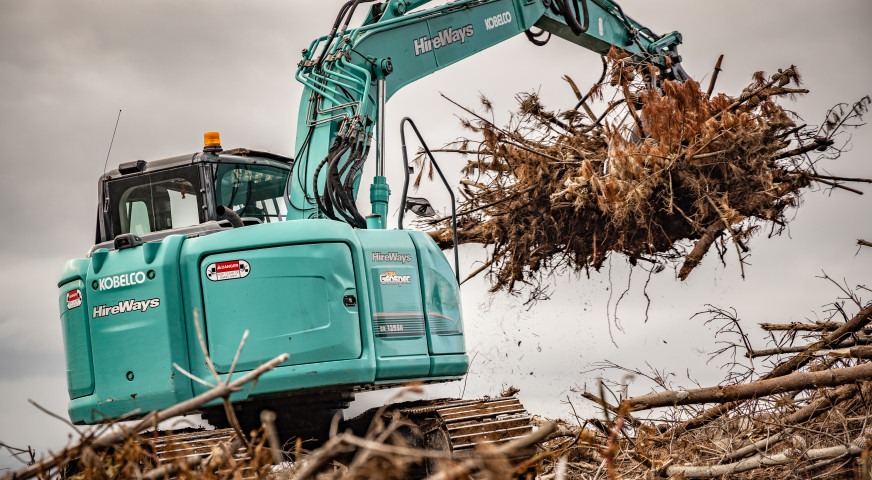
See it grip your job, not just the spec sheet
Numbers on a page are a starting point. The real test is how a Multi-Grab performs on your material, your site, your excavator.
If you're a dealer, these are the numbers your customers will ask for, and now you've got the real ones on hand, backed by the engineering behind them.
If you're running the machine, talk to your local Attach2 dealer about the right Multi-Grab size for your excavator, or get a quote for your next job.
Grab force figures calculated at 3000 psi standard operating pressure. Specifications indicative and subject to change without notice. (c) Attach2 Ltd.
Tags:
.png)


